
The Crawl Space Moisture Trap
Older homes in Dallas / Fort Worth were beautifully crafted with pier and beam foundations to allow airflow underneath the property. However, over decades, shifting Texas clay and poor yard drainage cause these homes to settle into the soil. Worse, when the crawl space ventilation fails, the trapped humidity begins to literally rot the wooden structure from the inside out.
When the main sill beams and floor joists degrade, your floors become noticeably bouncy, soft, and unlevel. Interior doors stop closing, and the structural integrity of your home is severely compromised. A+ Foundation Repair specializes in restoring the strength of these historic and custom homes.
Wood Rot Only Spreads
Wood rot is like a cancer to your foundation. The longer you let moisture linger in your crawl space, the more timber you will have to replace. Termites are also highly attracted to wet, rotting wood. Stop the rot today before a minor repair turns into a massive structural overhaul.
"A+ Foundation Repair went under my 1950s house, replaced all the rotted wood, and my bouncy floors are finally solid again. Truly expert craftsmen!"
The A+ Restoration Process
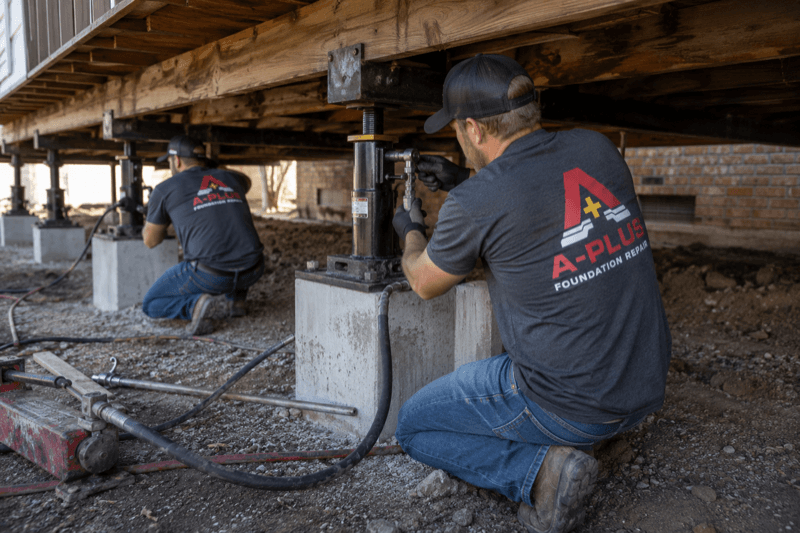
Our highly trained structural carpenters don't just patch the problem; they rebuild the foundation's strength. We crawl under your home, identify the exact source of failure, and replace rotting timber with premium, treated lumber. We then install robust concrete footings and properly reshim the entire structure to level your floors perfectly.
Beyond just replacing the wood, A+ Foundation Repair addresses the root cause: moisture. We ensure your crawl space has adequate cross-ventilation to keep the wood dry, preventing the rot from returning.
Signs of Pier & Beam Failure:
- Noticeably bouncy or sagging floors
- A distinct damp, musty smell inside the home
- Interior doors that drag or won't latch
- Visible gaps between the floor and baseboards
- Sheetrock cracks above archways
Stop the Rot
Texas weather changes fast. Get a completely free, no-pressure crawl space evaluation to protect your home.
Schedule Free EvaluationOr call (972) 436-2595Why Choose A+
- Expert Structural Carpenters
- Fully Licensed & Insured
- Family Owned & Operated
- Decades of DFW Experience
Pier & Beam Repair: Frequently Asked Questions
Straight answers about pier and beam repair — method, cost drivers, timelines, and what to expect afterward.
How do I know if my pier and beam foundation needs repair?
Bouncy or sagging floors, visible dips toward the center of the house, doors that stick at the top, and a musty smell from the crawl space are the usual signs. Because a pier and beam structure is accessible from below, a crawl space inspection tells us far more, far faster, than we can learn from a slab home.
What causes sill beams and joists to rot?
Trapped moisture. When a crawl space has poor ventilation, poor drainage, or standing water after rain, humidity stays high and wood-rot fungi thrive. Texas heat accelerates it. The structural repair fixes the damaged wood; correcting the moisture source is what stops it from happening again.
Can you repair just the damaged sections, or does everything need replacing?
In most cases we replace only what is compromised. We probe the beams and joists to establish how far the damage extends, replace those members with treated lumber, and leave sound structure in place. Wholesale replacement is occasionally warranted on badly neglected homes, but it is not our default recommendation.
How much does pier and beam repair cost?
It depends on how much wood needs replacing, how many piers need to be reset or added, and how accessible the crawl space is. A tight crawl space takes longer to work in and that affects labor. We give you a written scope after inspecting beneath the home, with the specific members to be replaced identified.
How long does pier and beam repair take?
Most jobs run one to three days. Extensive beam and joist replacement, or work combined with crawl space drainage correction, can take longer. We will tell you the expected schedule before starting.
Should I add a vapor barrier or improve crawl space ventilation?
Frequently, yes. A vapor barrier over exposed soil dramatically reduces the moisture rising into the crawl space, and proper ventilation lets what remains escape. Together they are inexpensive compared with structural repair and they directly address the cause of most pier and beam failures in North Texas.
Can a pier and beam home be leveled like a slab?
It is leveled differently but the goal is the same. Rather than driving piers under a monolithic slab, we adjust and add supports beneath the beams, shimming and resetting to bring the floor system back to plane. It is generally less invasive than slab work and easier to fine-tune.
Are pier and beam foundations better than slabs in Texas clay?
They have real advantages: plumbing is accessible, the structure can be adjusted over time, and the crawl space buffers some soil movement. They also demand more maintenance, particularly moisture control. Neither type is immune to North Texas clay, and both can be repaired successfully.
Will my floors stop feeling bouncy after the repair?
Yes, that is one of the most immediately noticeable results. Once rotted members are replaced and support spacing is corrected, the springiness underfoot goes away. Most customers notice the difference the day the crew finishes.
Do you warranty pier and beam work?
Yes. We warranty our structural work, and we will walk you through exactly what the coverage includes for your specific scope before you sign anything.
Trusted Across North Texas
See why your neighbors rely on A+ Foundation Repair.
Trusted by Homeowners
Don't just take our word for it. See what our clients are saying.
Texas Weather Changes Fast. Don't Wait.
Foundation damage doesn't fix itself—it only gets more expensive. Protect your home's value before the next heavy rain cycle shifts your soil. Get a completely free, no-pressure structural evaluation today.